Connectivity in sport is a multifaceted topic, offering material for several fascinating chapters in your summer reading. In June, MyConnectivity organised the “Connecting Tomorrow” side event as part of Nexus Luxembourg 2026. Throughout the day, experts from sport, esports, technology and event management explored the invisible infrastructure that underpins performance, safety and the fan experience. Now, we are revisiting the key takeaways from these discussions. This week: the ultra-connected athlete and the question: “Can you win without technology?”
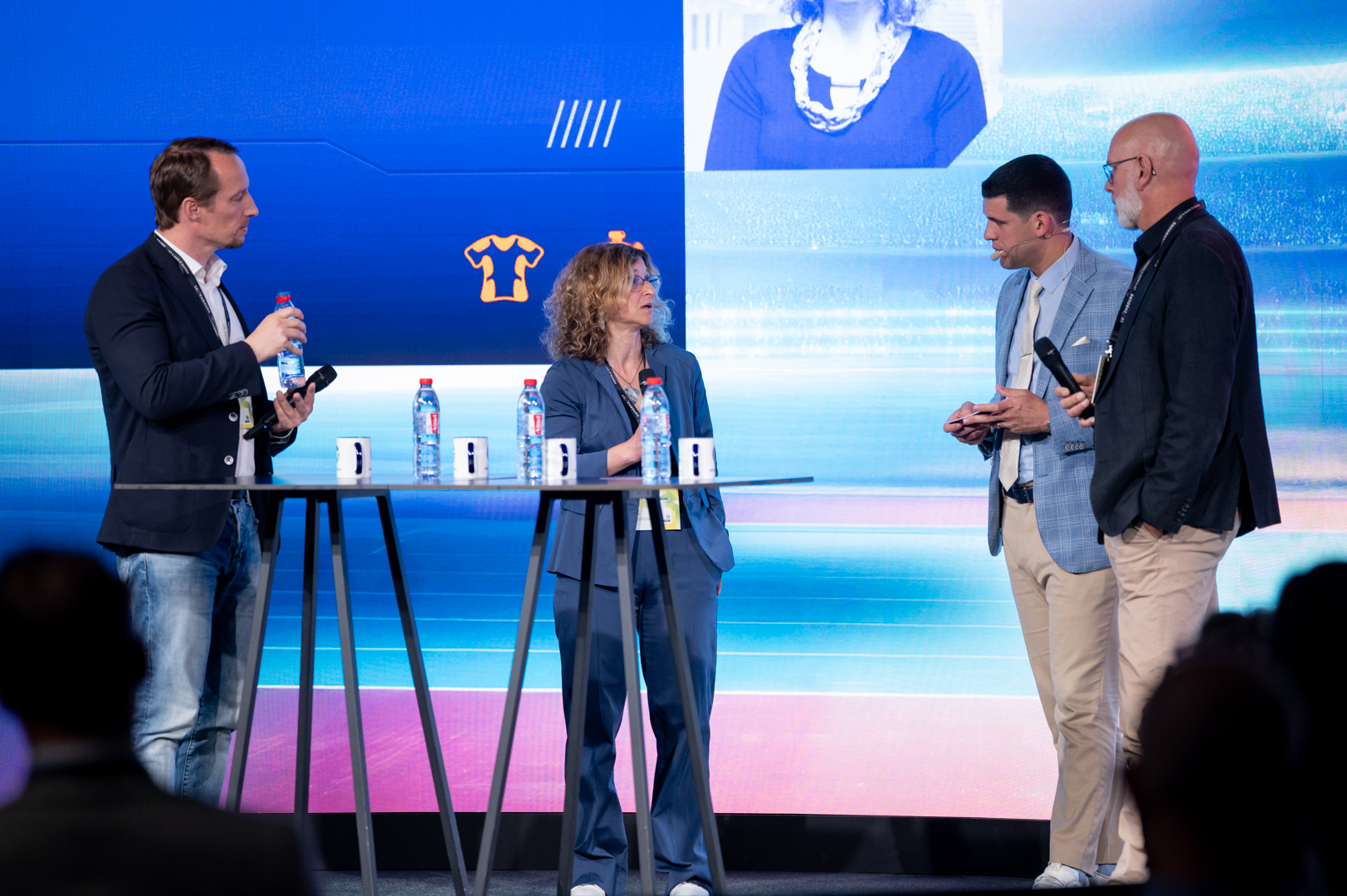
Have sensors, video and artificial intelligence become essential to winning in elite sport? And how can data improve performance without losing sight of the athlete behind the numbers? These were the questions at the heart of the discussion between Raymond Conzemius, Director of Sport at the Luxembourg Olympic and Sports Committee (COSL), Alwin De Prins, Managing Director at the Luxembourg Institute for High Performance in Sports (LIHPS), and Professor Olga Barrera of the Luxembourg Health & Sport Sciences Research Institute (LHSSRI).
Performance has become a team effort
Around the athlete are coaches, doctors, physiotherapists, strength and conditioning trainers, nutritionists and analysts. Technology helps them better understand training load, detect fatigue and reduce the risk of injury. But it also brings new people and new data into the equation, all of which need to be coordinated.
For Raymond Conzemius, artificial intelligence can become an additional member of this team, able to flag potential issues and support recommendations. It must not, however, push the athlete out of the centre of the process. The final decision remains a human one.
Not every discipline depends on the same tools
For Alwin De Prins, a former Olympic swimmer, the answer depends heavily on the sport. In cycling, power output, aerodynamics, nutrition, recovery and strategy are measured almost continuously. Reaching world-class level without scientific support now looks extremely difficult.
Other disciplines leave more room for a less technology-driven approach to preparation. The role of equipment, physiology and team coordination varies considerably between sports. So, the question is not simply whether you can win without technology, but in which sport, at what level and against competitors with what resources.
That said, connected devices have become part of everyday life. A watch or a sensor can track sleep, heart rate or training load. When returning from injury, measurements are compared with reference data. But Alwin De Prins is clear: no single figure should determine a medical or sporting decision.
Collect less, but collect better
Professor Olga Barrera, scientific director of the Luxembourg Health & Sport Sciences Research Institute, likewise cautions against confusing volume with relevance. Her research focuses on biomechanics, cognition, movement and equipment. In each of these areas, the question is not how much data can be gathered, but which data can actually improve a decision.
The proliferation of sensors creates challenges around integration, storage and data processing. Poor-quality data, or data taken out of context, can lead to flawed recommendations. An AI model is only as reliable as the data it is trained on.
Alwin De Prins adds that an expert still has to interpret the result for the athlete. Human interpretation remains essential to assessing the reliability, ethical implications and practical relevance of the finding. A tool can detect a variation; a doctor, trainer or coach has to understand what it means in a specific situation.
Artificial intelligence can democratise expertise
Professor Olga Barrera nonetheless sees a significant opportunity in AI: making certain types of analysis more accessible to organisations with fewer resources. A simple video or affordable sensors can help identify talent, personalise an exercise or provide initial technical feedback.
This democratisation is particularly relevant for small countries, amateur clubs or less high-profile disciplines. Not everyone can always maintain a full scientific team. Well-designed tools can bring expertise closer to the athlete and broaden talent identification beyond pathways that are already well served.
This does not mean sports scientists are disappearing. Rather, Olga Barrera believes that knowing how to work with artificial intelligence will increasingly become part of a sports scientist’s skill set. Training is therefore essential: professionals need to understand the limits of these models, recognize potential biases and know how to interpret their outputs in context.
Luxembourg as a human-scale laboratory
Luxembourg has a specific advantage: the close links between the sports movement, research institutes, medical structures and public authorities. Raymond Conzemius stresses the importance of strengthening connections between these stakeholders so that knowledge flows quickly and benefits federations and athletes alike.
LIHPS, COSL and LHSSRI embody this approach. Their cooperation can help build benchmarks suited to Luxembourgish athletes, support recovery from injury and prepare for major events. The country’s small size makes exchanges easier, provided data is governed rigorously and professional roles remain clearly defined.
These close links can also make pilot projects easier to run. A federation can trial a tool with a limited group, compare the results with coaches’ observations and then collectively decide whether it is worth adopting. This helps ensure that investment follows evidence rather than novelty.
Protecting health data remains central to all of this. Athletes need to know what is being measured, why it is being collected, who can access it and for how long it will be kept. Trust determines adoption just as much as the technical quality of the system.
Can you still win without technology? In some disciplines, certainly, for now. In others, competing at the highest level without it is becoming increasingly difficult. But the real edge does not come from the number of sensors an athlete wears. It comes from knowing which information matters and turning it into the right action — without losing sight of the athlete who ultimately has to train, choose and perform.