Connectivity in sport is a multi-faceted topic, offering material for several fascinating chapters in your summer reading. In June, MyConnectivity organised the “Connecting Tomorrow” side event as part of Nexus Luxembourg 2026. Throughout the day, experts from sport, esport, technology and event management explored the invisible infrastructure that underpins performance, safety and the fan experience. Now, we are revisiting the key takeaways from these discussions. This week: Formula 1 with Mark Gallagher.
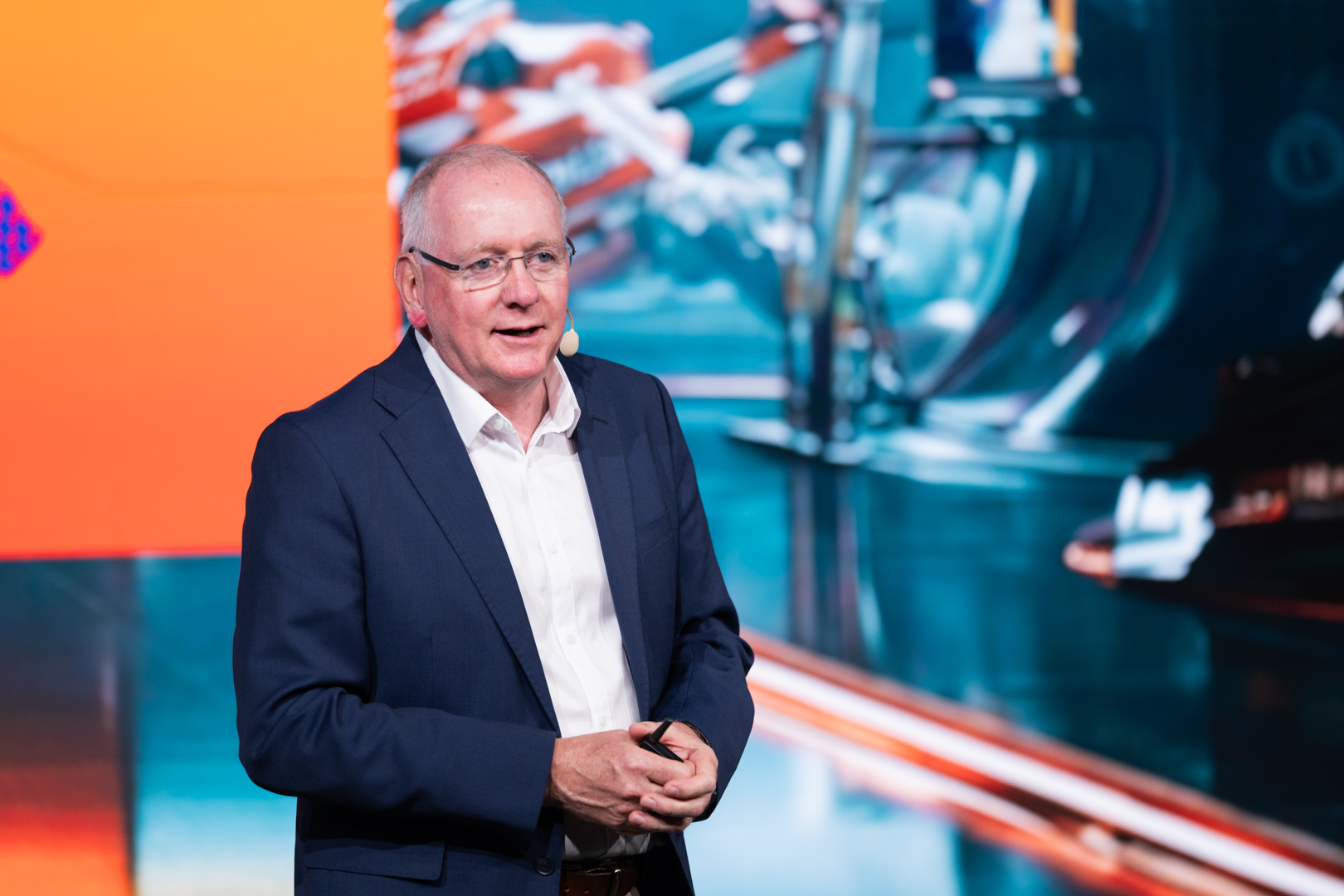
How did a championship historically centred on mechanics become a digital spectacle followed all over the world? And how does connectivity allow teams to simultaneously improve their performance, their business model and their relationship with fans? These were the questions at the heart of Mark Gallagher’s talk, drawing on more than forty years of experience in Formula 1, including in leadership and marketing roles.
A technology company before it is a racing team
A modern team is no longer just two drivers and a handful of mechanics. The largest teams employ up to 2,000 people, drawing on skills from aerospace, automotive engineering and information technology. Around 90% of staff stay at headquarters, where they design the car, develop the software and support the trackside team remotely.
The car itself is therefore just the visible part of a system made up of simulators, computing centres, video feeds and secure networks. Each Grand Prix becomes a public demonstration of a company’s ability to bring these technologies together under extreme pressure. Unlike a company that reports its results every quarter, a racing team wins or loses live, in front of its partners and clients.
Data turns victory into a story
During a race weekend, a car transmits several terabytes of data. The driver only perceives a fraction of it: travelling at very high speed, they must focus on the few hundred metres of track visible ahead of them. At headquarters, analysts have a broader view and can compare information from the cars against prepared scenarios.
Mark Gallagher explains that teams run several million simulations for each Grand Prix. Artificial intelligence widens the range of scenarios considered: tire wear, weather, pit stops or a safety car. It does not replace the engineers, but it increases their ability to react.
Max Verstappen’s win at the 2021 French Grand Prix illustrates this approach. While following Lewis Hamilton, Red Bull’s strategy tool recommended an extra pit stop that seemed costly at first. The calculations showed, however, that fresh tires would allow him to close the gap. Verstappen overtook his rival on the penultimate lap. The result combined the software, strategist Hannah Schmitz, the mechanics and the driver.
For brands, this collective intelligence enriches the spectacle. Behind an overtake lies a global organisation capable of turning data into decisions. Graphics, radio communications and images from the control centre give the public access to behind-the-scenes moments once reserved for engineers.
From viewer to participant
The relationship with fans has also changed. Younger audiences no longer necessarily watch an entire race on television. They consume highlights, analysis, statistics, vertical videos and content produced by teams or drivers. The Grand Prix becomes the high point of an ongoing digital conversation.
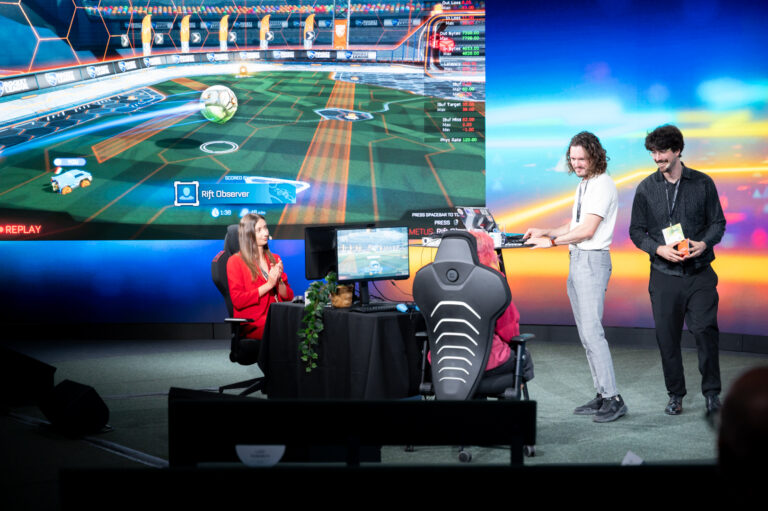
The pandemic accelerated the integration of esport. When real-world competitions were suspended, Formula 1 already had the infrastructure in place to quickly organise virtual Grands Prix. Fans could then become participants, racing on the same digital circuits and comparing their performance.
This shift gives marketing a new depth. The simulator is used to train professionals, but it has also become a media platform, a product and a gateway into the brand. It even helps bring through drivers from a generation that learned early on to move seamlessly between the virtual and the real.
Moving data instead of studios
Broadcast production also illustrates the organisational gains brought by connectivity. For decades, Formula 1 moved an entire TV village made up of studios, antennas, kilometres of cable, hundreds of staff and nearly 160 tonnes of equipment.
During the pandemic, a remote production centre was built in the United Kingdom. Footage from the circuit is now edited, enriched with graphics and distributed to broadcasters and platforms from there. By replacing some travel with data flows, the championship has reduced certain costs as well as part of its environmental footprint.
A single race can thus simultaneously generate an international broadcast, radio highlights, interactive statistics and personalised content. Connectivity turns every Grand Prix into a global platform for editorial production.
A lesson for Luxembourg
Presented at Nexus Luxembourg 2026, this transformation resonates strongly in Luxembourg. The country has international networks, data centres, satellite activities and a concentrated digital ecosystem. Like a racing team, it must convert the quality of its infrastructure into services, skills and experiences that people can actually feel.
Luxembourg’s businesses can also take note of how Formula 1 pairs every innovation with a use case and a story. High-performing infrastructure remains abstract as long as the customer doesn’t understand what it actually lets them achieve faster, more safely or with fewer resources.
Mark Gallagher’s lesson therefore extends beyond the track: technology creates an advantage when it connects people, speeds up decision-making and feeds an understandable story. Formula 1 still sells speed, but its brand value is built everywhere its data flows.