Automated driving is high on Luxembourg’s innovation agenda. The country is pursuing a concrete national strategy called ‘Automatisiertes Fahren 2028’ (Automated Driving 2028). One supporting element of this strategy is connectivity.
The strategy, developed jointly by the Ministry of the Economy and the Ministry of Mobility, was presented in autumn 2025. It is the result of the objective set out in the coalition agreement to make Luxembourg the first European country to enable automated driving on its territory by 2028.
Leading European laboratory for the mobility of the future
The aim is to position the country as a living laboratory for the mobility of the future and to become a European center of excellence for automated driving. In the given context, the government is building on the country’s strengths: a high level of experimentation, a culture of cross-sector cooperation and a dynamic digital ecosystem with high connectivity as its backbone.
The overarching goal is clear: automated driving should inspire economic diversification and the creation of new jobs and lead to a further improvement in citizens’ quality of life. In addition, integration into the national concept for the development and further expansion of multimodal mobility is planned.
European Funding schemes
As connected automated driving is a long-term approach, sustainable funding plays a key role. In Luxembourg, funding is built on several pillars:
- The Fonds National de la Recherche (FNR) supports relevant research activities, particularly within the framework of public-private partnerships (PPPs).
- The government’s funding programme Fit4Start is aimed at start-ups, which, provided they have a suitable focus on innovation, have access to various investment funds. Luxinnovation is the point of contact here.
- Luxinnovation also provides access to various European level funding schemes, such as Horizon Europe, and to numerous opportunities for cross-border cooperation in the field of future-oriented mobility.
Six courses of action for a sustainable social impact
The strategy is based on six courses of action, which in turn are closely aligned with the strategic initiative “Accélérer la souveraineté numérique 2030” (Accelerating Digital Sovereignty 2030):
- appropriate governance and a suitable legal framework,
- the development of the necessary skills and talents,
- further strengthening of infrastructures and ecosystems,
- promotion of related research and innovation,
- the introduction of effective support services,
- profound and ongoing international cooperation.
In terms of concrete implementation, the two ministries in charge are focusing, among other things, on living labs and test environments that facilitate the innovation and validation of technologies. This ranges from closed sites to the use of automated vehicles under real-life conditions and is to be carried out in cooperation with public and private actors in order to ensure that the technology has a sustainable social impact.
Five specific use cases by 2027
In a next step, five use cases are to be tackled or further advanced by 2027:
- Robotaxis for driverless transport services on demand, such as already conducted in the framework of road tests by Pony.ai and Emile Weber. The potential of this approach is demonstrated by the fact that another robotaxi project was launched in June 2026: in Bissen, the European ride-hailing company Bolt, car manufacturer Stellantis and Pony.ai have been testing the use of five robotaxis ever since. In a second phase of the project, these trials are set to be extended to Luxembourg City.
- Last mile shuttles – automated shuttles for the last mile, integrated into public transport networks, such as operated as a pilot by CFL and Ohmio in Belval.
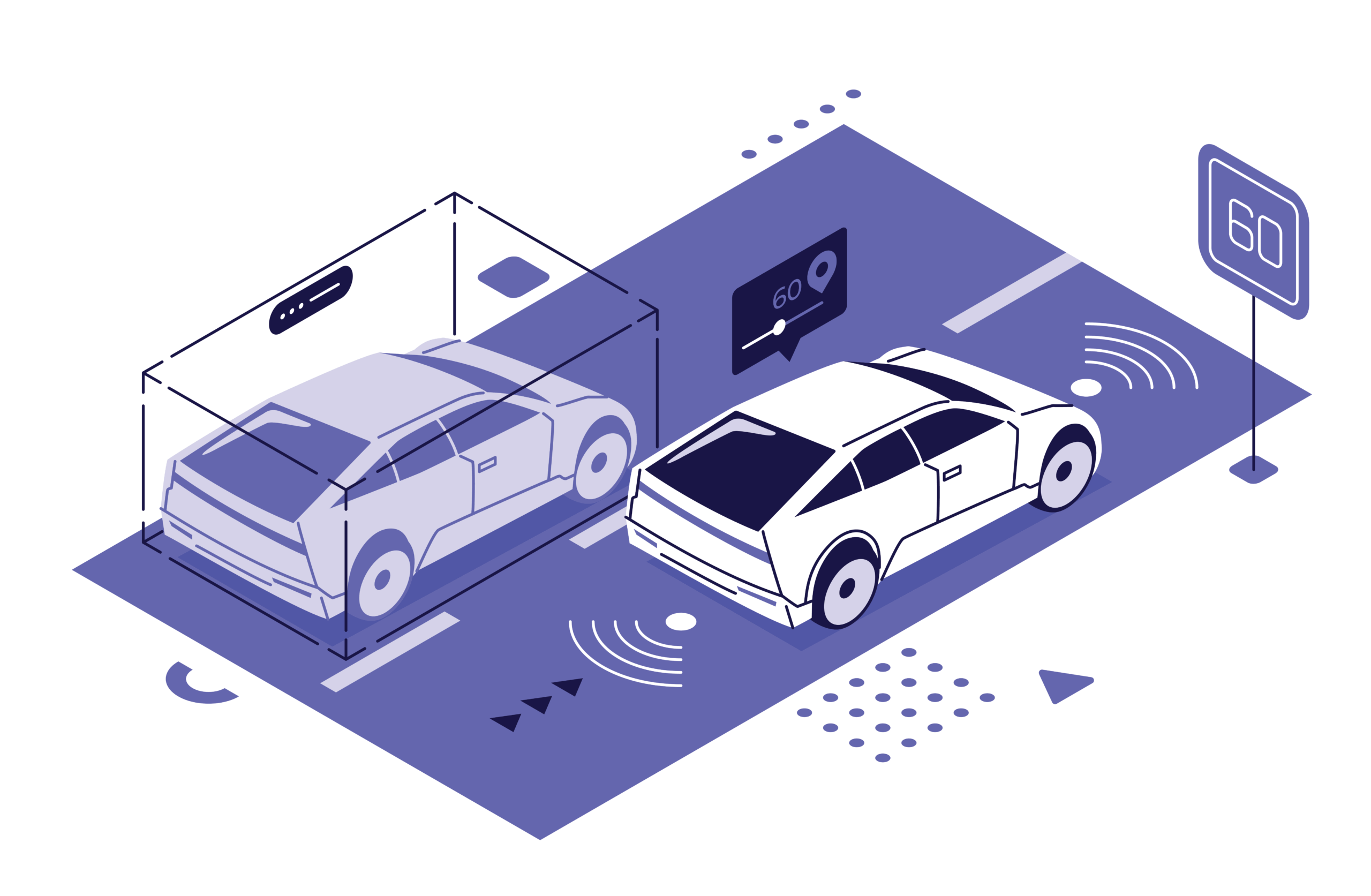
- Parking services and traffic-calmed areas for the automation of manoeuvres in controlled environments,
- The field of automated logistics to meet the challenges of freight transport,
- Automatic driving on motorways for greater safety and smoother traffic on main transport routes.
Optimistic (AI)forecast for 2030
According to internationally accepted definitions, the latter application falls under automation level 3 (conditional automation) or 4 (high automation). A rule of thumb here is that the higher the level of automation, the greater the need for high-performing connectivity. Luxembourg’s highly developed infrastructure provides a competitive advantage, which might also be one of the reasons why Google’s AI is optimistic about automated driving in the Grand-Duchy. It predicts:
“In 2030, automated driving in Luxembourg will likely be characterised by a combination of projects already underway and the increasing integration of “robotaxis” and “last-mile” shuttles. Various levels of autonomous driving are expected, with levels 3 and 4 playing an important role on motorways to improve safety and traffic flow.”
The six levels of driving automation
The definition of automated driving levels was established by the globally recognised standardisation organisation SAE International. It comprises six levels of driving automation, reaching from 0 (where the driver does everything) to 5 (where the vehicle drives itself in all conditions). In detail:
- Level 0 (No Automation),
- Level 1 (Driver Assistance),
- Level 2 (Partial Automation),
- Level 3 (Conditional Automation),
- Level 4 (High Automation),
- Level 5 (Full Automation)