Connectivity in sport is a multifaceted topic, offering material for several fascinating chapters in your ‘rentrée’ reading. In June, MyConnectivity organised the “Connecting Tomorrow” side event as part of Nexus Luxembourg 2026. Throughout the day, experts from sport, esports, technology and event management explored the invisible infrastructure that underpins performance, safety and the fan experience. For this year’s, we are revisiting the key takeaways from these discussions. This week: major sporting events and the connectivity that keeps them moving.
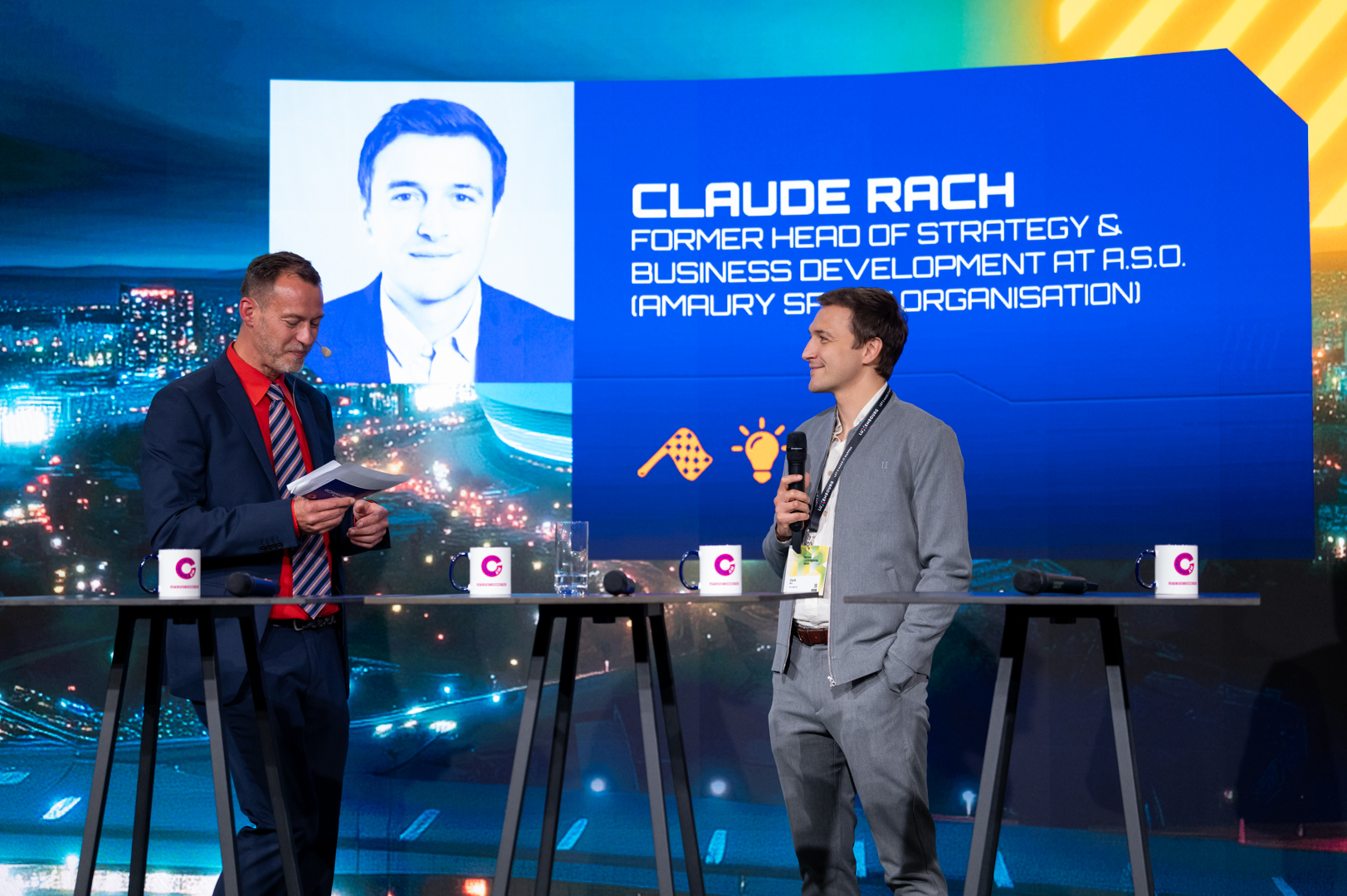
How do you organise a competition whose playing field changes every day, sometimes taking it through remote or desert areas? And how does connectivity make it possible to coordinate teams, protect competitors and inform the public without stripping the sport of its unpredictability? These were the questions addressed by Claude Rach, former Head of Strategy and Development at Amaury Sport Organisation, drawing on his experience with the Tour de France and The Dakar.
Rebuilding an entire environment every day
Unlike a stadium, these events have no permanent infrastructure. At every stage, organisers have to set up technical facilities, connect teams, coordinate emergency services, accommodate the media and inform the public, before starting all over again the next day in a different location.
For Claude Rach, organising the Tour de France is essentially like moving a stadium every day. Connectivity is not just about providing internet access: it links a political, operational and media ecosystem made up of local authorities, security forces, teams, partners, volunteers and residents.
Safety, the first benefit of connectivity
The Dakar Rally illustrates this transformation particularly well. The competition crosses vast desert areas, far terrestrial networks and difficult for emergency services to reach. Satellite links make it possible to track competitors, detect an unusual stop or an accident and trigger a faster response.
This monitoring capability makes possible routes that would once have been considered too risky. Technology removes neither the danger nor the uncertainty, but it improves situational awareness and shortens response times.
Claude Rach is clear about where the priority lies: when technology protects athletes, teams or staff, it should be allowed to advance as far as necessary. In this area, better information and more reliable transmission bring a direct benefit.
Informing without making the sport predictable
Using data becomes more complex when it affects performance or the spectacle itself. In cycling, riders and their team managers know their power output, speed, route and effort levels with considerable precision. This information can improve strategy, but it can also leave less room for intuition.
For Claude Rach, data should remain in the service of emotion. It can reveal what goes on behind the scenes, explain the challenges athletes face or enrich the story being told. It should not overwhelm viewers or reduce athletes to simply following instructions from a screen.
Sport retains its power because it leaves room for error, for pushing one’s limits and for the unexpected. The challenge, then, is to strengthen safety and understanding without erasing the unpredictability that makes competition compelling.
The organiser becomes a technology conductor
In the years ahead, organisers will have access to more real-time data to monitor events, adapt their operations and offer more immersive experiences. Their role will evolve accordingly.
Once mainly responsible for routes and logistical coordination, organisers now need to understand mobile networks, satellite technology, tracking tools, broadcasters’ needs and data protection. They do not need to become experts in every technology, but they do need to know how to choose the right partners and make their solutions work together.
Their goal is not to make the infrastructure visible. On the contrary, a successful event is one in which information flows naturally, emergency services respond at the right moment and the public can enjoy the spectacle without ever noticing the technical complexity behind it.
What lessons for Luxembourg?
Luxembourg hosts neither the Dakar Rally nor a permanent Tour de France stage, but it does organise numerous cycling races, marathons, urban events and cross-border competitions. These, too, bring together municipalities, emergency services, police, network operators, media organisations and associations.
The country’s small size can make coordination easier, while the quality of its networks and its expertise in satellite technology are significant assets. Routes, however, can quickly cross several municipalities or run close to national borders. Interoperable communications and joint preparation among all stakeholders therefore remain essential.
The country’s international character adds another requirement. Participants, volunteers and service providers do not always share the same language or use the same tools. Clearly defined communication channels, simple procedures and accessible information therefore become just as important as the technology itself.
The model described by Claude Rach invites us to think of every event as a temporary ecosystem. Mapping needs, setting priorities, identifying areas with poor coverage and testing backup solutions should all happen from the design stage onwards.
Municipalities could also make greater use of the experience they gain. After each event, incidents, response times and network usage can be analysed to improve the next edition. Building this shared institutional memory helps avoid having to recreate the entire setup from scratch for every new event.
A mobile stadium is not built with barriers and vehicles alone. It relies on an invisible infrastructure that follows the competition from one location to the next. For Luxembourg, as for the world’s biggest event organisers, success depends on connecting people, systems and services that have only a few hours to come together and work as one.